The Pause Before the Door Opens
A calm departure starts before the latch turns. Build a simple doorway routine that gives your dog a clear place to wait while you get ready.
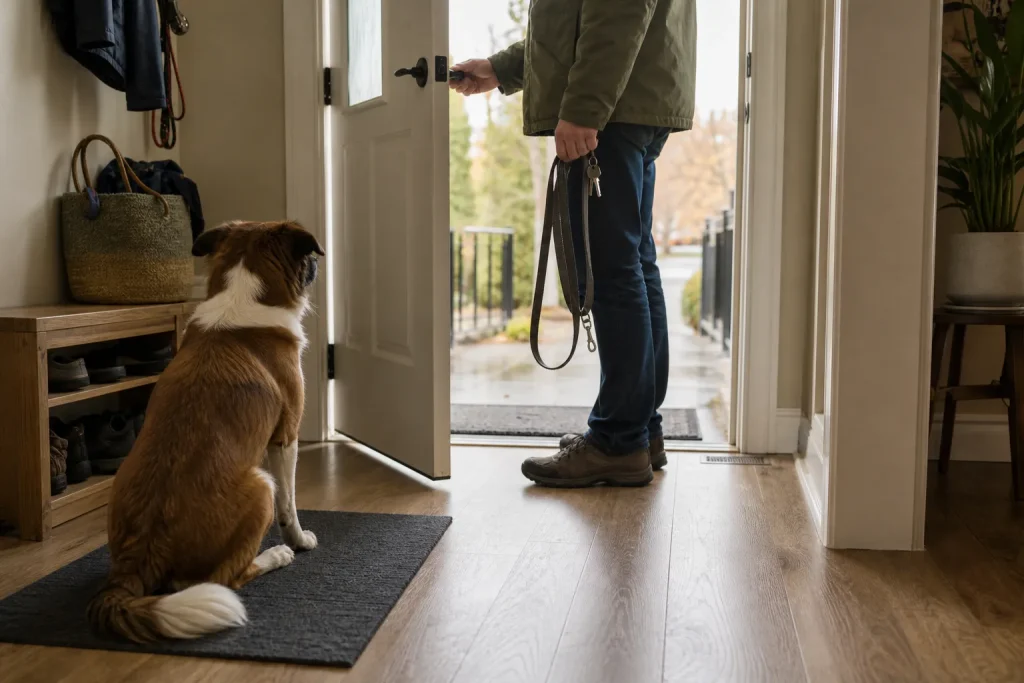
The leash is clipped, your keys are in hand, and your dog is leaning toward the door. Pause there. A repeatable doorway routine gives your dog a clear job while you finish getting ready: wait at a safe spot until you give a release cue. Let the door move only as far as your dog can handle calmly, and use what you see to decide when to make the next attempt a little harder.
Where should your dog wait?
Choose a spot where your dog can see you without being crowded by the moving door. A nonslip mat, a floor marker, or a familiar patch of flooring can work. Set it far enough back that the door will not bump your dog or trap the leash. In a narrow entryway, use a spot in the nearby hall.
Invite your dog onto the spot with a simple cue such as “mat.” Reward them there with a small treat or quiet praise. The mat can work like a bookmark: it marks where to return while you handle the next part. Keep it stable and within easy reach.
How can you make the first practice easy?
Practice at a quiet time when you are not actually leaving. Cue your dog to the mat, touch the handle, reward them for staying, then step away and say a distinct release word such as “okay.” Start with just that one movement. Pick up your keys or put on a coat only after the handle touch is manageable.
Use an observation to decide what comes next. If your dog stays on the mat, remains comfortable, and can respond to your cue through the action, repeat that version before adding a small new movement. If they step off, freeze, or become too excited to take a treat, make the next attempt easier: move farther from the door, touch the handle without turning it, or shorten the pause. These are signals to adjust the task, not reasons to scold.
Imagine your young dog gets up whenever the keys jingle. In a quiet practice, cue the mat, pick up the keys, and watch what happens. If the dog stays on the mat and takes the treat, say “okay” and end the repetition there; try the same keys action again before adding anything. If the dog gets up, put the keys down, guide them back without pulling, and try again with your hand merely resting on the keys. The observable decision is simple: keep the keys action at its current level while the dog can stay and respond; make it smaller if they cannot.
How much should the door open?
Once your dog can stay put while you handle the door without opening it, add a little movement. Touch the handle, reward the wait, then open the door a crack and close it. If your dog remains settled and responds to the cue, repeat that opening before trying a wider one. If they spring up, freeze, or stop taking a treat, close the door if it is safe and return to an easier movement, such as reaching toward the handle.
Keep the door under your control. Use a leash or baby gate if the entry opens directly to a sidewalk, shared hallway, or another place where an unexpected dash could be dangerous. A cue is not a substitute for a physical barrier when one is needed.
Which departure tasks should you add?
After the door movement is manageable, add ordinary preparations one at a time: putting on a coat, adjusting the leash, or picking up a bag. Check your dog’s position and comfort during each action. If they stay on the spot and remain responsive, repeat that task before pairing it with another. If they bounce when you clip the leash, practice the clip separately with the door closed and no plan to leave.
Keep the leash loose enough for your dog to stand comfortably, while holding it so they cannot reach the threshold before you are ready. Do not pull them into position. If they leave the spot, pause and invite them back. You can also prepare shoes, keys, and your bag before bringing your dog to the doorway, leaving only the final door-and-leash actions for the wait.
When is it time to release your dog?
Choose one release word and use it after you are ready to move through the doorway. Say it once in a calm voice, then invite your dog to come with you. At first, reward the release by moving forward together and offering praise or a treat just beyond the threshold, where it is safe to pause.
If your dog starts forward before the release, stop your own movement and calmly reset. Close the door if safe, return to an easier version, and try again. Avoid repeating the cue while your dog is already moving; wait for a moment of calm before asking for another pause.
What if the doorway is difficult that day?
Excitement, an urgent potty break, visitors in the hall, or a noisy delivery can make waiting harder. Use a gate, practice farther inside, or skip extra training and focus on moving safely with the leash secured. For a dog who worries about the door or outside sounds, do not insist on a stationary wait at the threshold. If fear or frantic behavior persists, ask a qualified, reward-based trainer or your veterinarian for advice suited to your dog.
- Check: Your dog stays on the mat while you touch the handle. If: they stay and remain responsive, repeat the handle touch; then: add a small turn of the handle. Otherwise: reach toward the handle without touching it.
- Check: Your dog remains on the mat when you pick up the keys. If: they stay, repeat the keys action; then: try putting the keys down and picking them up again. Otherwise: rest your hand on the keys, then reward and release.
- Check: Your dog stays settled when the door opens a crack. If: they remain in place and can respond to the cue, repeat that opening; then: try a slightly wider opening. Otherwise: close the door if safe and practice a smaller movement.
- Check: Your dog stays on the spot while you put on a coat. If: they remain comfortable, repeat the coat action; then: add another departure task. Otherwise: take the coat off and practice a shorter movement, such as lifting it from a chair.
- Check: Your dog stays put while you clip on the leash. If: they remain calm, reward and release; then: practice taking one step toward the door together. Otherwise: practice the clip with the door closed and shorten the pause.
- Check: Your dog waits until the release cue before moving. If: they do, say the cue and walk through together; then: keep using that same sequence. Otherwise: stop, reset safely, and return to an easier door movement.
- Check: The entry is open to a sidewalk or shared hallway. If: an unexpected dash could put your dog at risk, use a gate or secure leash before practicing; then: train only with that barrier in place. Otherwise: keep the leash controlled and continue at a manageable level.
End practice while your dog is still managing the task. A brief pause, a loose leash, and a shared step through the doorway are useful signs that the sequence is clear enough for that moment. Keep the spot, cue, and release consistent, and let your dog’s observable response—not a fixed schedule—guide the next small change.
Nearby reading
The Guest Visit, Planned from the Dog’s Corner
Make visits easier to manage by assigning guest roles, simplifying arrivals, and arranging the room so…
Let the Nose Set the Pace
A sniff-friendly walk depends on choosing the right route for the moment. Learn where to pause,…