Let the Nose Set the Pace
A sniff-friendly walk depends on choosing the right route for the moment. Learn where to pause, when to keep moving, and how to teach clear walking cues before you need them.
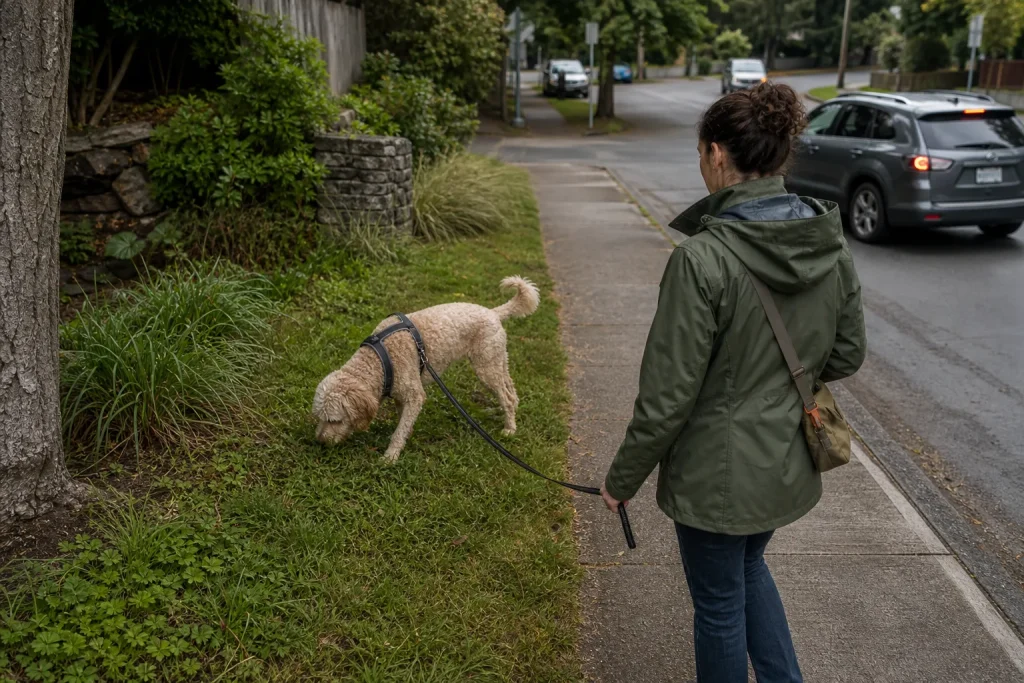
At a narrow sidewalk beside a busy driveway, your dog catches a scent just as a car is backing out. That is a moving-on moment, not a sniff break. A good nose-led walk comes from choosing suitable places to explore and making clear decisions about when the route calls for steady travel.
Think of a route as a set of different surfaces on a map: some are good for lingering, others are simply connections between safer spots. You can give your dog real freedom to investigate without treating every interesting smell as an invitation to stop.
Which parts of the route are good for sniffing?
Before setting out, look for places where you can stop without blocking people or losing sight of nearby hazards. A broad verge, a quiet planted strip where dogs are allowed, or an open edge of a park may work. Keep enough room for pedestrians, strollers, and mobility aids to pass, and avoid stopping beside driveways, blind corners, or narrow gates.
Use narrow or crowded stretches to travel between those places. If a tree or wall offers a safe, out-of-the-way pause, take it; otherwise, keep moving. Sniffing can be part of a walk without happening at every scent.
Check the ground ahead for discarded food, broken glass, sharp plant debris, or animal waste. If you cannot inspect a spot or are unsure whether something is hazardous, guide your dog past it. For a possible exposure, contact a veterinarian or another qualified professional rather than guessing.
How should you choose a route for the day?
Let the conditions set the route. A quiet block with broad sightlines may suit a dog who is uneasy around traffic or other dogs. If your dog is comfortable in busier places, you might travel through an active stretch and pause later at a calmer edge. In either case, keep the leash short enough to prevent a sudden dash toward a road, while leaving enough slack for your dog to lower their nose and turn within the space you can safely offer.
Route choice can also reflect your purpose. For a wandering outing, pick a path with several suitable places to pause. If you have a destination, such as a class or a veterinary appointment, choose a direct route and plan a sniff break only where stopping will not obstruct others or make you late.
Say you are heading to a class and have ten minutes before you need to arrive. The direct sidewalk is crowded, but a parallel side street has a wide verge and fewer driveways. You take the side street, allow a pause at the verge, then use a familiar moving cue before the final busy block. The observable tradeoff is clear: your dog gets a safe sniff break, while you keep enough time and room to reach the entrance without stopping in the crowd.
If your dog is young, elderly, recovering from an injury, or managing a health condition, follow the route and pace guidance from your veterinarian. Choose ground and activity that fit that guidance, and turn back if movement seems difficult or your dog appears unwell.
How do you teach a cue for leaving a sniff spot?
Do not wait until your dog is absorbed in a tempting scent to introduce “this way.” Teach it first in a quiet, familiar place where leaving is easy. With your dog on leash and a few small treats ready, say the cue once in a warm voice, take a step away, and reward your dog when they turn and come with you. Repeat briefly, then stop while the exercise is still easy. The cue should predict a calm change of direction, not a tug.
Once your dog responds readily in that simple setting, practice near a mild distraction, such as a quiet patch of grass. Let them sniff, say “this way” once, and step toward the route you have chosen. When they follow, reward them with a treat or by continuing to a permitted sniffing spot. If they do not turn, avoid repeating the cue or pulling; move farther from the distraction and make the practice easier.
You can teach “go sniff” in the same low-pressure way. Say it as you release your dog to investigate a safe patch, so the phrase consistently marks permission to explore there. On walks, use “go sniff” only where stopping is safe, and “this way” when you are ready to leave. These cues work best when the route gives you room to carry them out.
What should you do when the leash tightens?
If your dog reaches the end of the leash, stop advancing rather than pulling them toward you or letting them drag you to a scent. When slack returns, continue toward a suitable spot if the route allows. If the spot is unsafe or blocks the path, use the cue you have practiced and move on calmly.
Repeated tension is useful route information. The stretch may have too many close-up distractions, or your dog may need a quieter place to settle. Try a less tempting parallel street, shorten the outing, or head home. Avoid using leash pressure to force your dog’s nose away from the ground; it does not tell them where sniffing is welcome.
Keep wildlife and food litter in your route decisions, too. Choose another path if dropped food is common, and give birds or other animals space if your dog is fixated or lunging. A leash helps prevent chasing, but a route with fewer close encounters may be the better choice. Follow local rules about planted areas and trails, pick up waste, and stay out of restricted habitat zones.
When should you change the plan?
A route is working when your dog can move between exploring and traveling without repeated pulling, and you can manage the leash while leaving room for others. The rhythm may vary: one dog pauses often, while another prefers a few longer searches. You do not need to offer every scent.
Change course if your dog keeps pulling toward unsafe ground, spends the walk scanning rather than sniffing, or seems uncomfortable. Choose a safer parallel route, find a quieter place, or head home. If time is short, take the direct path and keep any planned pause to a spot where you can stop without crowding others.
Before you leave, decide which parts of the route are for exploring, which are for moving through, and what conditions would make you turn or change streets. That small bit of planning makes room for curiosity while keeping the walk considerate and manageable.
Nearby reading
The Guest Visit, Planned from the Dog’s Corner
Make visits easier to manage by assigning guest roles, simplifying arrivals, and arranging the room so…
Brush Time Without the Wrestling Match
A calmer grooming session begins with the right tool for the coat and a clear plan…