Brush Time Without the Wrestling Match
A calmer grooming session begins with the right tool for the coat and a clear plan for tangles. Follow one invented household’s practical choices for brushing without turning the task into a struggle.
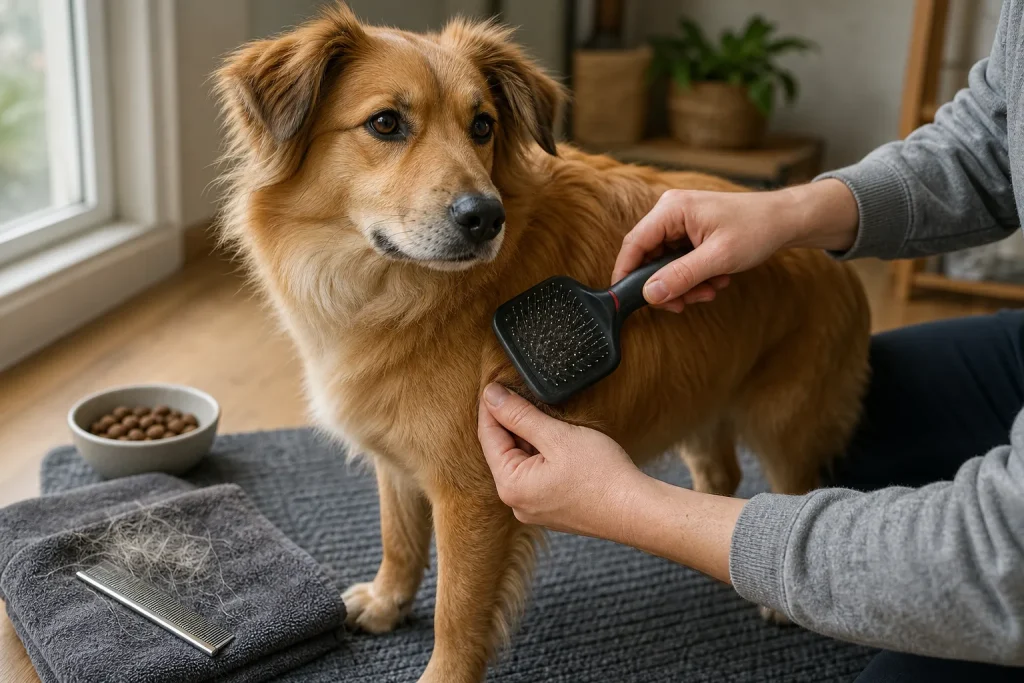
A slicker brush glides over a short, smooth coat, while a pin brush can pass over a snag without loosening it. The tool that feels familiar in your hand may be a poor match for your dog’s coat, so start by checking what the coat actually needs—not by brushing harder.
How do you match the tool to the coat?
Look at the coat’s length, texture, and tendency to tangle. A soft bristle brush may suit a short, smooth coat; a pin brush or slicker may be useful for some longer coats, depending on the dog and the tool’s design. A metal comb can help check whether hair near the surface is free of loose tangles, but it should not be forced through a knot.
Before each session, inspect the brush. Set aside one with bent pins, rough edges, trapped debris, or a damaged handle. Run it gently across your palm; if it scratches or snags your skin, don’t use it on your dog. If you are unsure which tool suits the coat, ask a qualified groomer or veterinarian for guidance.
Choose one modest task: for example, lifting loose hair from the back, or checking a feathered area for small tangles. Different coats need different care, so a simple aim is more useful than applying the same tool and routine to every dog.
What should you check before brushing?
Part the coat with your fingers and look at the skin where you plan to work. Notice whether hair lies flat, whether a small knot is visible, or whether the skin looks irritated. Set out only what the task calls for: a suitable brush, a comb for a gentle check if appropriate, a towel to catch loose hair, and a few small treats.
- Brush condition: If the pins are smooth, clean, and intact, use the brush gently; if they are bent, sharp, or dirty, clean or replace it before grooming.
- Coat response: If the brush passes through loose hair without catching, continue with light strokes; if it catches, stop and inspect the spot rather than pulling.
- Knot size and location: If a tangle is small, loose, and away from the skin, consider a cautious attempt while keeping the skin from being tugged; if it is tight, close to the skin, or widespread, ask a groomer for help.
- Skin condition: If the skin looks normal and your dog is comfortable with gentle contact, proceed with the planned area; if you see redness, a sore, or swelling, leave that spot alone and consult a veterinarian when appropriate.
- Dog’s posture: If your dog stands comfortably and accepts a light touch, try one gentle stroke; if the body stiffens, the dog repeatedly turns away, or tries to leave, stop and make the next attempt easier.
- Tool choice: If the brush suits the coat and moves smoothly, use it for the task; if it snags repeatedly or seems to scrape, switch to a suitable tool or seek professional advice rather than adding force.
How do you set up the session?
Choose a floor-level spot with enough room for your dog to stand, turn, and leave. A nonslip bath mat can help provide footing. Put the brush, towel, and treats within your reach before inviting your dog over, but keep the exit clear. Good light helps you see whether the tool is moving through loose hair or catching at a knot.
Keep unrelated supplies out of sight. Nail clippers, shampoo, ear cleaner, and a dryer belong to other tasks; setting them all out can make a simple brushing session feel like a larger event. A tidy work area is like a clear kitchen counter: you can reach the one utensil you need without rummaging while the job is underway.
What does a coat-specific session look like?
Say you have a hypothetical dog named Milo with a medium coat, a clean pin brush, a nonslip mat, and a small loose tangle near the shoulder. Milo approaches the mat and accepts a gentle hand touch. His person first makes one light stroke through an easy patch of coat. The brush moves smoothly, so they make a few more strokes in the same area and pause to check Milo’s posture.
Next, the brush catches at the shoulder tangle. Milo’s person stops rather than tugging, parts the hair with their fingers, and sees that the knot is loose and not close to the skin. They support the coat near the knot and make one cautious attempt to ease the tangle, then check Milo’s response. If it remains caught or Milo shows discomfort, they leave it and contact a groomer; in this invented situation, the tangle loosens with the gentle attempt, and Milo remains relaxed. His person finishes with a few easy strokes, puts the brush away, and lets him move off.
The result is limited and observable: loose hair comes away, the small knot is no longer caught, and there is no need to brush the whole body. If your dog walks away sooner, end the session there. Note which tool and area were manageable so the next session can begin with a familiar, easy patch.
When should you leave a tangle to a professional?
Stop if a knot is tight, close to the skin, extensive, or painful to touch. Don’t cut mats out with scissors: skin can be drawn into the tangle and accidentally injured. A qualified groomer can assess coat-care options; a veterinarian is the right person to consult if the skin looks sore, grooming triggers a sudden pain response, or your dog’s tolerance changes unexpectedly.
Also stop if the brush repeatedly scrapes or catches despite a light touch, or if your dog shows sustained tension or tries to leave. Don’t pin your dog down or use treats to lure them into a position they cannot leave. If grooming is difficult to manage safely, ask a veterinarian or qualified groomer about a suitable plan.
What should you note for next time?
Afterward, jot down the tool, coat area, and what happened: “pin brush moved smoothly over shoulder” or “comb caught near the hind leg; stopped.” Those details help you choose a sensible starting point and spot recurring trouble areas. Keep the next session focused on a comfortable patch, and change one factor at a time—such as the tool or body area—so you can tell what needs adjusting.
Coat care becomes easier to plan when decisions follow what the brush and coat are telling you. A smooth pass calls for gentle continuation; a snag calls for inspection; a painful or persistent mat calls for professional help. That simple distinction can keep a routine focused on care rather than on finishing at any cost.
Nearby reading
The Guest Visit, Planned from the Dog’s Corner
Make visits easier to manage by assigning guest roles, simplifying arrivals, and arranging the room so…
Let the Nose Set the Pace
A sniff-friendly walk depends on choosing the right route for the moment. Learn where to pause,…