The Guest Visit, Planned from the Dog’s Corner
Make visits easier to manage by assigning guest roles, simplifying arrivals, and arranging the room so your dog has a quiet place away from the traffic.
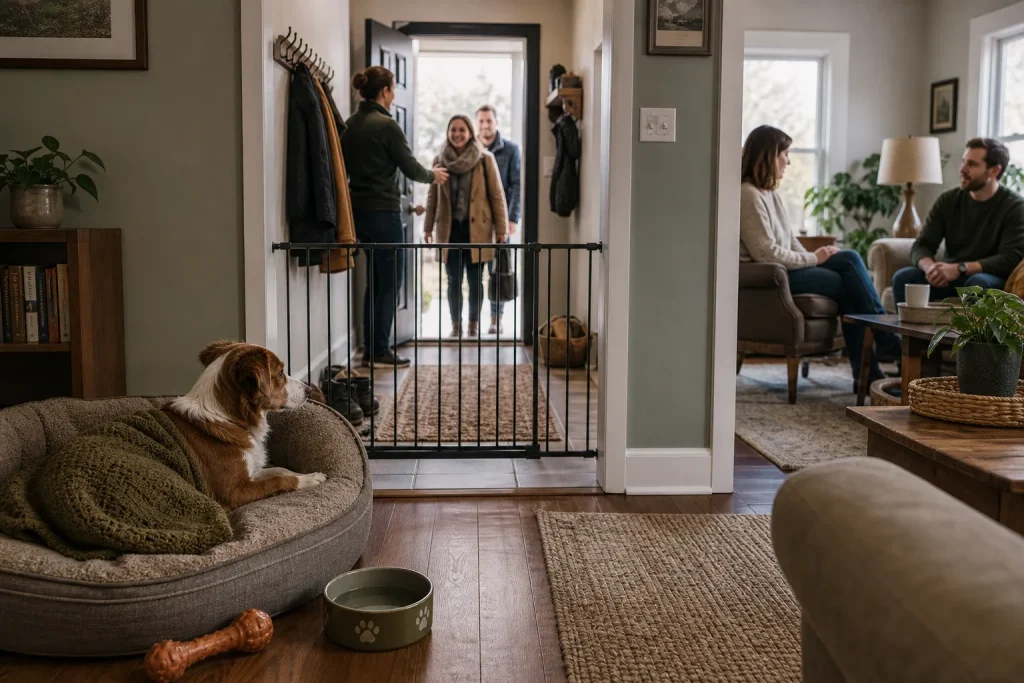
A calm guest visit often depends less on a perfect greeting than on where people put their coats and who handles the door. Plan those details before guests arrive, and your dog is less likely to meet a crowd in a narrow hallway. Some dogs may choose to greet; others may watch from a distance or rest in another room. The household can make each option easier.
Where will people and the dog move?
Walk the route from the entrance to the room where guests will gather. Move shoes, bags, and loose cords out of the way, and choose a place for coats that does not block the dog’s usual path. If the entry opens directly into the living room, use a familiar gate or interior door to manage traffic only if your dog is already comfortable with it.
Set up a resting spot outside the busiest route: a bed in a bedroom, a gated section of a quiet room, or a crate if your dog already rests comfortably there. Put familiar bedding and water nearby. Leave the spot available during ordinary days so it is not a surprise when visitors come. Do not use a crate or closed room if confinement causes distress; ask a qualified trainer or veterinarian about a safer plan if needed.
Think of the entryway like a kitchen counter before cooking: clear the work area first, and the busy part becomes easier to manage. A simple floor plan can help too. Decide where guests will wait, where they will put their belongings, and which route the dog can use without passing through a cluster of people.
Who handles each part of the arrival?
Give each person a clear job. One adult can manage the dog or an already familiar barrier; another can open the door, welcome guests, and direct them to the gathering room. Ask visitors to leave the dog alone at first: no calling, reaching, leaning over, or following. If children are visiting, an adult should supervise them and keep them out of the dog’s resting area.
Tell guests about the plan before they arrive. Ask them to text rather than ring if the bell is upsetting, and let them know where to put coats and bags. If the hallway is tight, have them wait outside or in a nearby room while the door is managed. Keep the instructions short enough to remember: “Come in, put your coat on the hook, and head to the living room; please let the dog approach you.”
Use this concrete check before the visit:
- Door sound: If the bell or knock unsettles your dog, ask guests to text; otherwise, keep the usual door signal.
- Entryway width: If people and dog would have to squeeze past each other, direct guests to wait outside or use another entrance; otherwise, keep the path clear and let them enter one at a time.
- Coat and bag location: If belongings would block the dog’s route, choose a hook or room away from that route; otherwise, tell guests to use the usual spot.
- Dog-management equipment: If your dog is comfortable with a familiar gate or leash, have it ready before opening the door; otherwise, use a quieter room or another arrangement your dog accepts.
- Guest roles: If no one is assigned to manage the door and dog, name an adult for each task before arrival; otherwise, remind everyone of their part.
- Children’s access: If children may enter the resting area, assign an adult to supervise and keep that area off-limits; otherwise, explain the boundary to the children before the door opens.
How can you rehearse the household routine?
Practice the logistics on a quiet day without asking your dog to perform a greeting. Put a coat on the hook, walk to the door, touch the handle, then return to what you were doing. If those movements upset your dog, make the rehearsal smaller: try the handle without opening the door, or practice when the dog is in a comfortable room farther away.
Agree on the guest script in advance. A host can say, “Please settle in first and let the dog decide whether to come over.” Make sure everyone knows not to send a child to fetch the dog or offer food by hand. If your dog likes a familiar food toy or chew, place it in the resting area before guests arrive, provided it is safe and enjoyable for your dog.
Imagine you have invited two friends, and your dog becomes alert when the bell rings. Before they arrive, you ask them to text, assign your partner to welcome them, and put their coats in the bedroom rather than the narrow entryway. When the message arrives, you settle your dog in a familiar quiet room with water while your partner opens the door. The expected observable result is a less crowded entrance and a quieter arrival; if your dog remains unsettled, keep the visit arranged around separate rooms instead of adding a greeting.
What should the arrival look like?
Before guests arrive, clear the route, set out water, and put any chosen resting items in place. Offer your dog a familiar walk or a relaxed chance to go outside, then allow time to settle at home. Avoid a last-minute burst of activity intended to tire the dog out; a steady routine is easier for everyone to follow.
When guests come in, let the assigned adults carry out their jobs without a scramble. Visitors can put away their belongings and settle before anyone considers meeting the dog. If your dog is in the room, guests can sit or stand naturally and leave their hands to themselves. A greeting is optional, not a task to complete.
If your dog approaches, a guest can stay still and let the dog sniff, then pause. Do not treat a brief approach or a wagging tail as permission for prolonged petting. Your dog should be able to move away without anyone following. If the dog chooses the resting area, keep guests from entering to coax them out.
How can you adjust the room during the visit?
Keep an eye on the layout as people move around. A clear route to the resting area matters as much as the room you chose at the start. If guests stand in a doorway, ask them to shift to the seating area. If conversation gets loud, move the gathering farther from the dog or close a familiar interior door.
Say a child begins running between the living room and kitchen while your dog follows. You ask the child to stay beside an adult in the living room, then guide the dog toward the familiar resting room without asking the child to help. The expected observable result is that the hallway stays clear and the dog is no longer caught in the child’s path. If adults cannot reliably supervise the child or prevent contact, separate them with a secure barrier and maintain direct adult supervision.
If your dog hides, repeatedly barks, paces, or seems distressed, reduce the demands of the visit. Ask guests to stop moving toward the dog, then manage the layout so the dog can remain in a quiet area without visitors entering. Do not punish growling or other warnings. For fear, guarding, or distress that is hard to manage, keep guests separated from the dog and seek advice from a qualified humane trainer or veterinarian.
How should guests leave?
Departures bring coats, bags, and an open door back into the busiest part of the home. Before anyone gets up, move your dog to a familiar place away from the entrance, and make sure one adult is responsible for the dog while another sees guests out. Ask visitors not to call the dog over for a final goodbye.
Once the door is closed, restore the usual household routine. Refresh water, offer a bathroom break if needed, and allow quiet rest. If the layout caused a pinch point, note which one—such as coats blocking the hallway or guests gathering by the door—and change that arrangement next time. When the roles are clear and the routes stay open, a visit can work well without requiring the dog to join the conversation.
Nearby reading
Let the Nose Set the Pace
A sniff-friendly walk depends on choosing the right route for the moment. Learn where to pause,…
Brush Time Without the Wrestling Match
A calmer grooming session begins with the right tool for the coat and a clear plan…